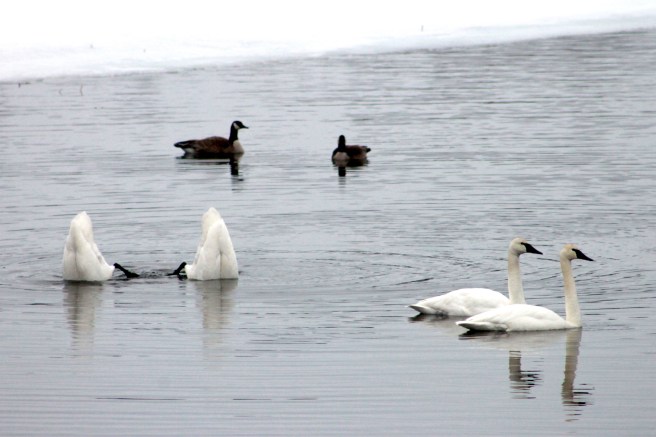
 Every time I drive over the bridge there are more of them there than the last time.
The returning has begun.
In the car, though, you miss the sound of it. On a blog, you do, too. There’s just nothing that replaces the physical act of standing on the bridge, leaning into a square wooden beam, and immersing yourself in a few minutes of that wondrous cacophony of honking, quacking and trumpeting. It’s the music of spring migration, and it’s enough to infuse any year-round resident who has weathered yet one more season of long nights and sub-zero temps with hope.
I heard them chattering in the church foyer last week, too, as the winter birds gathered round, tired faces relaxing into welcoming smiles for these forerunners of the much-anticipated annual migration. The sound of the returning was never so obvious, however, or so beautiful, than it was in the swelling fullness of the opening hymn.
Welcome back, snowbirds. It’s good to hear all your happy voices again.
“Even the stork in the sky knows her seasons; and the turtledove and the swift and the thrush observe the time of their migration.” (Jeremiah 8:7)
“For, lo, the winter is past…the time of the singing of birds is come.” (Song of Solomon 2:11-12)
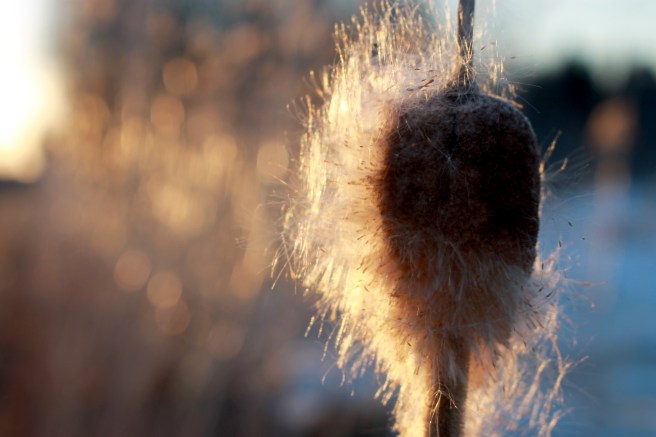 In this season between seasons, when it’s not really winter but doesn’t really seem like spring either, the changes occurring in the natural world are sometimes very subtle. Yet, I have learned, they are there. Nothing is really sitting still. Everything is silently, gradually, almost imperceptibly, readying itself for when it’s time to burst forth into newness of life. It does require my camera and I to look harder on these days when a walk still requires me to wear the old winter hat and mittens, but the discoveries we do make of coming spring are only that much more triumphant.
 With all these thirty-ish degree days we’ve been having lately it was bound to happen, just like it does every spring. And yet it still took me by surprise, when I glanced up from picking my cautious way across an icy patch on the driveway, to see this happy sign of spring in the ditch. The bursting forth of these furry little buds is so predictable, yet they always manage to catch me unawares and are always, suddenly, the most wonderful thing ever.
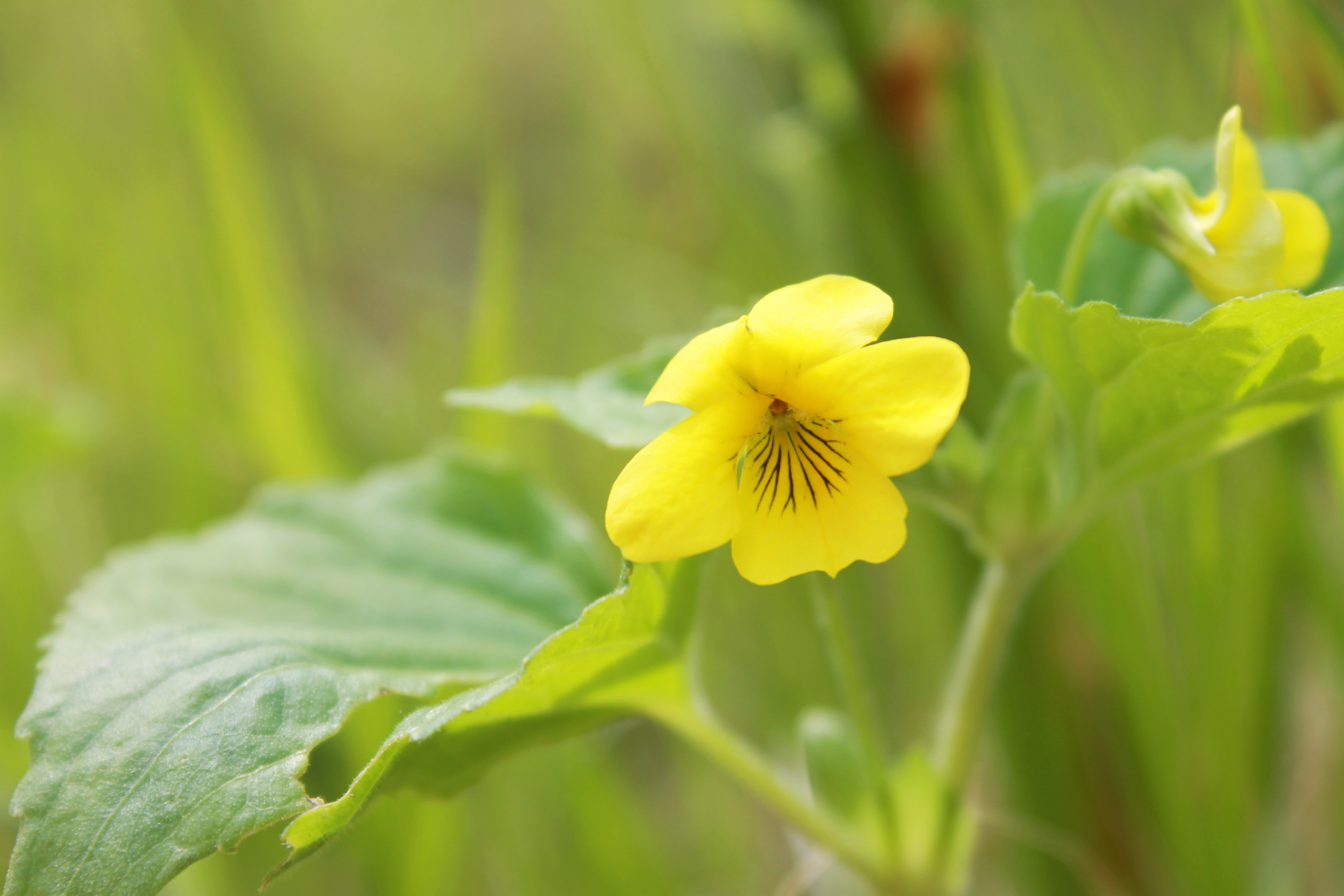
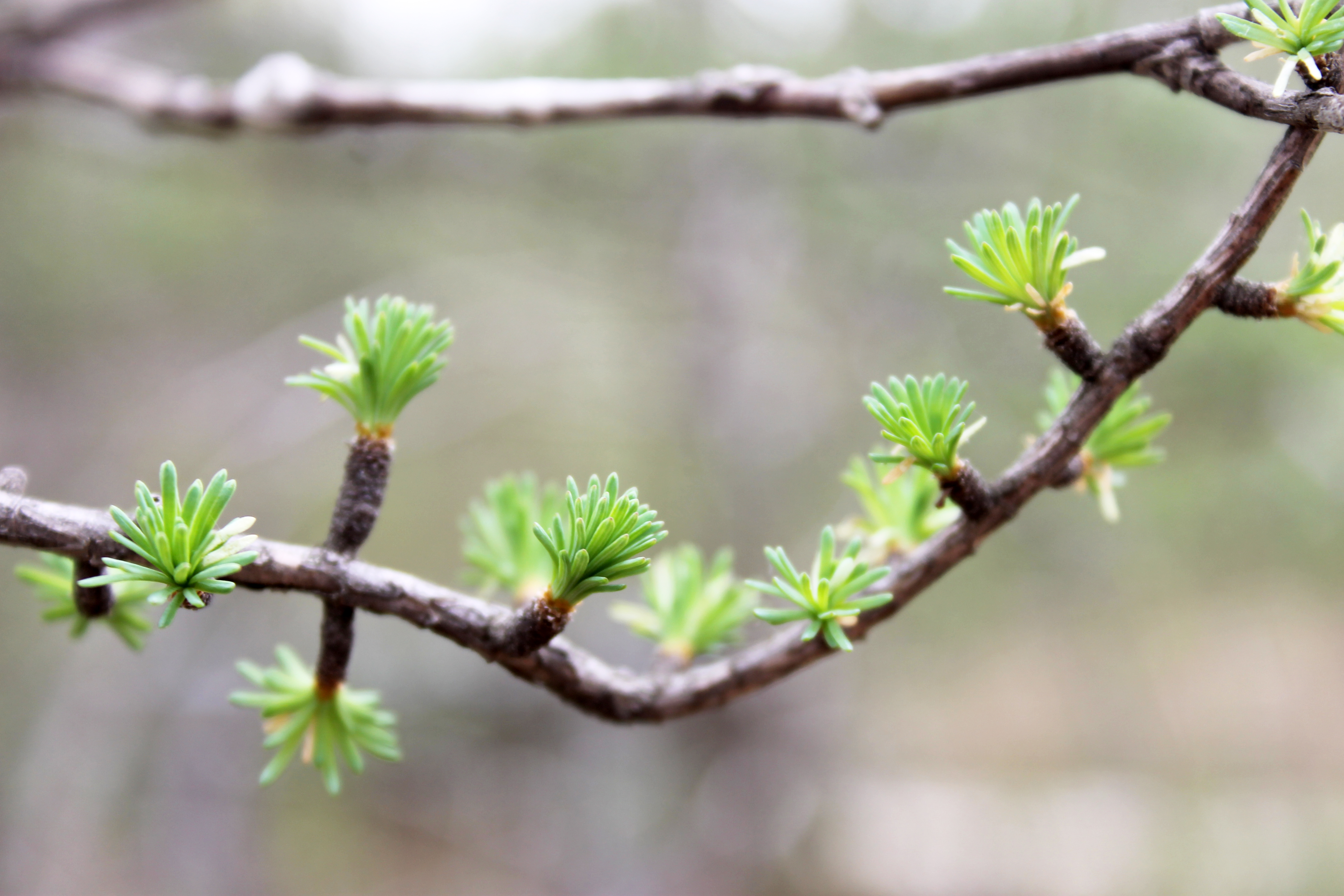
 It’s the best part of spring, that brief period of time when life begins to reemerge from the bare branches and brown earth. The world is exploding almost visibly with life, and I hardly dare blink lest I miss something. Everywhere I look there are buds bursting open, leaves unfolding, new scenes unfolding and an unending number of discoveries to make.
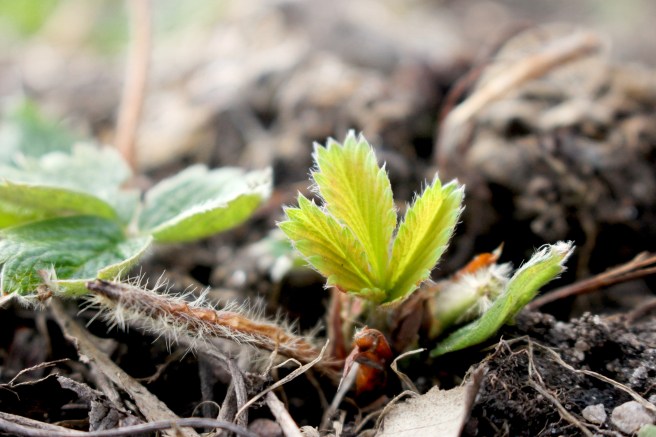 Then, there are the woodsy pilgrimages to make, traditions dating to my childhood, like going in search of the dainty lavender and white hepaticas that are so absolutely quintessential of a Minnesota spring.
 And, if I’m paying attention and watching my step as I go, there is almost always something new to discover. Something unexpected, like the strange forms of emerging horsetail at the edge of a gravel country road. Or a pair of sandhill cranes, flapping their half-graceful, half-ungainly way out of the maze of last year’s cornstalks. Or a fisher bounding across a lonely, narrow, backwoods road, stopping just long enough to glance back at us curiously.
 Beauty in the expected and familiar; beauty in the unexpected and unfamiliar. Truly,
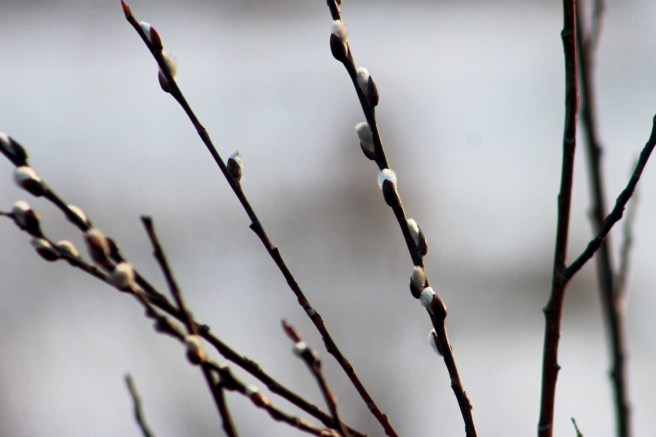 In the spirit of full disclosure, I’d like to say that these pussy willows were officially spotted on February 18th, which is some kind of crazy record in my personal experience. (I just didn’t get around to photographing them until now.) I guess that
  And so, my husband reminded us this morning in church, will Christ. And, interestingly, the signs of springtime are exactly the metaphor used in Scripture to parallel the signs that we can watch for to know that His coming is near.
 One of the earliest, loveliest flowers of spring is the pasque flower. While it doesn’t appear naturally up here in the northwoods, you have only to drive west to the prairies to find it growing wild and free in its native habitat. It’s also known as ‘wild crocus’—but I have to say I prefer it’s French name. I like the appropriate sophistication it lends to such a lovely bloom—but even more, I appreciate a deeper significance to the name that is likely lost on most people.
 Dare I say that the celebration of Passover holds even more significance for me as a Christian than for any Jew? Hallelujah!
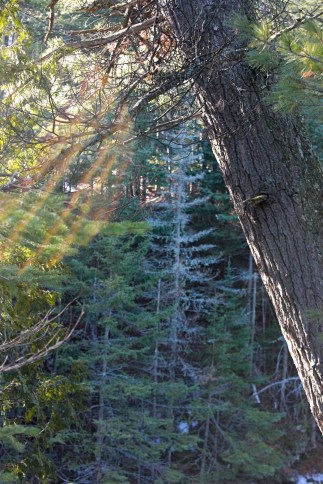
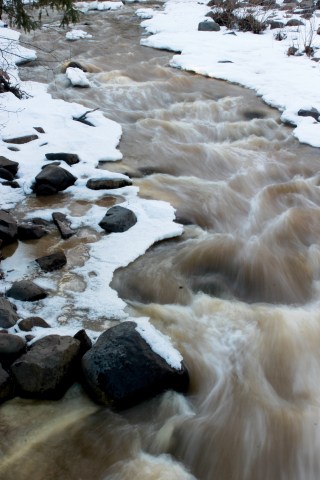 We were standing at the edge of a steep bank. Late afternoon sunlight slanted gold through pine branches over our heads, highlighting the moist hummocks of brilliant green moss creeping along the slanting forest floor. Below us, a river, satiated with a deluge of rapidly melting snow, rushed it’s wild, joyful way down to bigger waters.
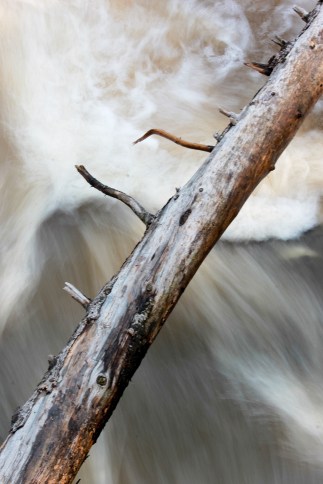
 The music of its abundant fullness reminded me of this verse: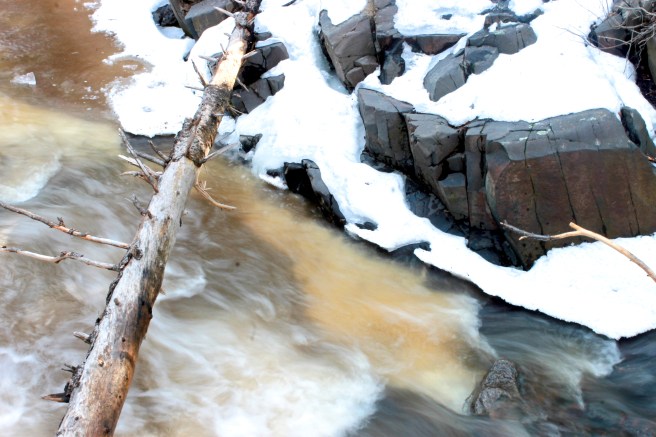






 Rejoicing Hills